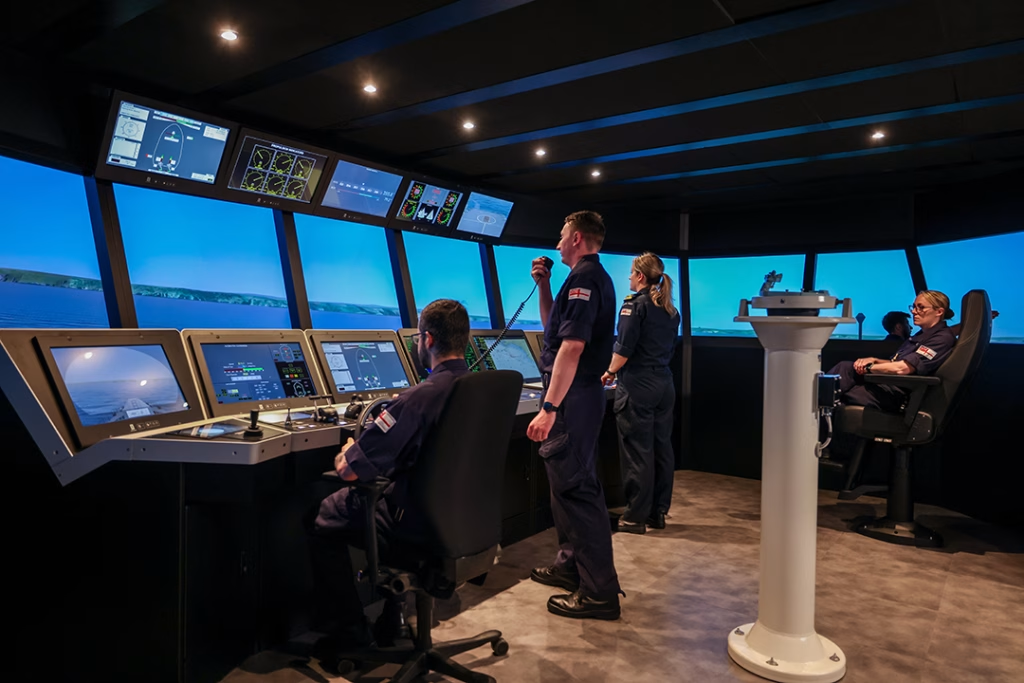
Scenario-based training

How a layered training ecosystem can close the warfighting performance gap and deliver the Royal Navy’s transition to a hybrid fleet.

by Toby Everitt, CEO & Founder

In our latest whitepaper, we set out how a layered training ecosystem built for modern, information‑led conflict can help the Royal Navy close the warfighting performance gap as it transitions to a hybrid fleet.

The Royal Navy is fast adapting to a new reality.

Current conflicts have reshaped battle spaces, the role of traditional forces and the tactics required to deliver strategic and tactical advantage.

In today’s theatres, marginal gains can no longer be secured through platform mass alone. Modern conflict now hinges on information, connectivity and the speed of decisions.

To adapt, the Navy is accelerating its transition towards an integrated mix of crewed platforms, uncrewed systems, autonomy and data centric operations. 

A new, modern hybrid fleet.

Delivering it requires more than new platforms. It demands a cultural shift from operators to warfighters, with training becoming the decisive mechanism for closing the performance gap created by this transition.

The challenge is, existing training delivery remains constrained by legacy constructs with platform bound pipelines, limited asset availability and instructor heavy models.

In this whitepaper, the solution proposed is a layered training ecosystem aligned to the Royal Navy’s training continuum.

It supports progression from individual operator and maintainer training through to team level effectiveness.

By integrating digital learning, applied simulation, immersive environments and hybrid operational context within a single scalable framework, the Navy can deliver accessible training that moves personnel from foundational knowledge to applied performance in controlled, repeatable and progressively challenging environments.

In doing so, it reduces reliance on scarce platform availability and high-fidelity collective training assets.

At the core of this concept is the recognition training must evolve in step with operational capability.

Preparing personnel for a Hybrid Navy requires more than platform familiarity; it demands an understanding of distributed operations, interaction with autonomous systems and the ability to make decisions within a complex, data rich battlespace.

The proposed ecosystem introduces these elements early in the pipeline, ensuring personnel are not only qualified, but prepared to operate effectively from the outset.

The whitepaper sets out how this layered training ecosystem can be delivered in practice, and how it can help the Royal Navy close the warfighting performance gap at the heart of its hybrid fleet ambition.

Download it to explore the full model, the training architecture and the pathway to preparing personnel to think, decide and act at pace within a modern, data rich battlespace.


Learn more about the Royal Navy's Hybrid Navy plans

Frequently Asked Questions

A hybrid navy is a force that combines crewed platforms, uncrewed systems, autonomy and data‑centric operations into a single integrated fleet. It shifts advantage from platform mass to information advantage, connectivity and decision speed, enabling the Royal Navy to operate effectively across distributed, complex and data rich battle spaces.

A Virtual Warship is a synthetic training environment that replicates naval systems, procedures and operational context in a scalable digital format. It allows personnel to practise tasks, rehearse decisions and build applied competence before accessing high fidelity simulators or live platforms, reducing pressure on scarce training assets.

A layered training ecosystem develops personnel through progressively challenging digital, simulated and immersive environments aligned to the Royal Navy’s training continuum. It moves trainees from foundational knowledge to applied performance by combining digital learning, procedural simulation, immersive environments and hybrid operational scenarios within a single scalable framework.

The Royal Navy’s training challenges stem from legacy, platform-bound delivery models that limit throughput and flexibility. Scarce asset availability, instructor heavy approaches and dependence on high-fidelity simulators constrain access, while digital learning alone does not build the warfighting mindset or decision speed required for modern, information led conflict.

The Royal Navy needs a hybrid fleet to maintain advantage in modern conflict, where success depends on information dominance, connectivity and rapid decision making. A hybrid mix of crewed and uncrewed systems, autonomy and data‑centric operations enables faster sensing, understanding and action across distributed battle spaces.

The warfighting performance gap is the difference between the skills personnel gain through traditional training and the applied performance required in modern, information‑led conflict. It appears when training pipelines cannot keep pace with new systems, distributed operations and data‑rich decision environments, leaving personnel qualified but not fully prepared to think, decide and act at the speed modern battlespaces demand.

Interested to find out more?​

Our team are ready to create your perfect training environment.
Get in touch today!

Download the whitepaper

Complete the form to get your free copy of The Virtual Warship: Enabling Training for the Hybrid Navy.

Metaverse VR

Are you eligible to work for Metaverse VR?

Metaverse VR has strict security clearance requirements for all employees. This includes:

  • Relocation – This is an onsite apprenticeship based at Portsdown Technology Park, Portsmouth, Hampshire. The role requires attendance at the office four days per week, with one day per week spent at the University, which is approximately 10 miles east of the office. Would you be willing and able to relocate to the Portsmouth area if successful?

  • Right to Work – Do you currently have the unrestricted right to work in the United Kingdom for the duration of the apprenticeship?

  • Security Clearance – This role will require you to obtain UK Security Check (SC) clearance. Are you eligible to undergo and obtain SC clearance? – National security vetting: clearance levels – GOV.UK (www.gov.uk)

Metaverse VR

Are your teams truly prepared for evolving risks?

Find out the gaps in the training programmes in less than 60 seconds. Answer 8 quick questions and get a personalised report in your inbox.

Metaverse VR

Be the first to know

Get our newsletter. Read the most up-to-date training news, technology innovations, and promotions in your inbox.