Quick Jump
There are many reasons trainees can struggle in a professional training space or in an educational environment. The best instructors use a toolkit of strategies to work with their trainees, to support them in their learning, and to guide them when they face barriers to learning.
Now, instructors have one of the most impactful and innovative new training strategies to add to their toolkit.
Augmented Reality (AR) training and Virtual Reality (VR) training have a proven record for being effective, accessible, and engaging for trainees.
In this blog, we speak to Dave – a UK MoD and Police Liaison – for his his insight and experiences in using AR and VR training.
Having served for approximately 25 years in the Armed Forces delivering training from initial recruit instruction through to specialist trade training across several high-profile military establishments, he has seen first-hand how technology can transform the way people learn.
“Augmented Reality and Virtual Reality are powerful tools for instructors,” he explains.
“They allow trainees to rehearse complex procedures, understand systems visually, and build confidence in a controlled environment before stepping into real-world scenarios.
“Used properly, these technologies do not replace good instruction. They enhance it to make training more accessible, repeatable and ultimately more effective.”
There are various reasons an individual may need extra support to access training, but common barriers include:
Learning difficulties have nothing to do with intelligence or capability. Some people simply need information presented to them in a particular way for it to be effective. A common example is dyslexia. If a trainee finds reading difficult, or cannot process information from reading, they’ll need specific support to make learning accessible and inclusive.
This is another example of an information processing challenge. “Some of the most capable trainees I’ve worked with have learned best through practical and visual instruction rather than long classroom sessions,” Dave told us. “Good training recognises people process information differently, and instructors need a range of tools to ensure every trainee can engage with the material and perform at their best.” Expecting someone with ADHD to keep still and listen for hours at a time is not going to result in quality training. We have to find another way to make the training work for the trainee.
Each can be used in training, depending on what you’re preparing for.
If trainees had a difficult time in formal education, for whatever reason, being back in a rigid classroom environment can be very counterproductive. In high-stress situations trainees can fail to cement vital information to memory and can find instructions impossible to follow. Keeping these trainees calm, focused, and engaged is an ongoing task until they can associate the learning environment with positivity and success.
Regardless of the specific challenge the trainee faces, AR and VR training levels the playing field for everyone. The inclusion of hyper-realistic and interactive visuals naturally supports a diverse range of learners.
Instructors can communicate key information to the trainees in an engaging way. It’s automatically more engaging than listening to a speaker and retaining information or reading texts and interpreting meaning. The visual nature of AR and VR means learners literally see and “experience” the training material rather than imagining it or memorising it.
PWC conducted a study of the effectiveness of virtual learning and found, “VR-learners were 4 times more focused during training than their e-learning peers and 1.5 times more focused than their classroom colleagues”.
AR and VR are immersive learning experiences meaning trainees use all their senses to access content materials. Trainees simply being supported with visual clues for learning rather than only written or verbal instructions makes learning more inclusive and effective. PWC reported trainees using VR completed training faster than their colleagues who didn’t use it, and they were more confident in their knowledge.
It’s not just about identifying where trainees may struggle,” explained Dave.
“It’s about finding practical ways to ensure everyone can access and absorb the learning. In my experience the most effective approach is blended training combining classroom instruction, practical activity and technologies such as AR and VR.
“As instructors we also need to monitor engagement and performance throughout the training so we can adjust our approach and make sure the material is actually being understood and retained.”
For that, Dave’s seen great success with AR and VR training. Breaking away from traditional training methods creates opportunities for different types of learners to access training more successfully.
Dave, Anartes
Understanding the theory and foundations of a concept is essential for a trainee to fully grasp the practical functions. But, the longer trainees stay in the “theory” stage, the more difficult they may find it to concentrate, follow the content, or retain the knowledge.
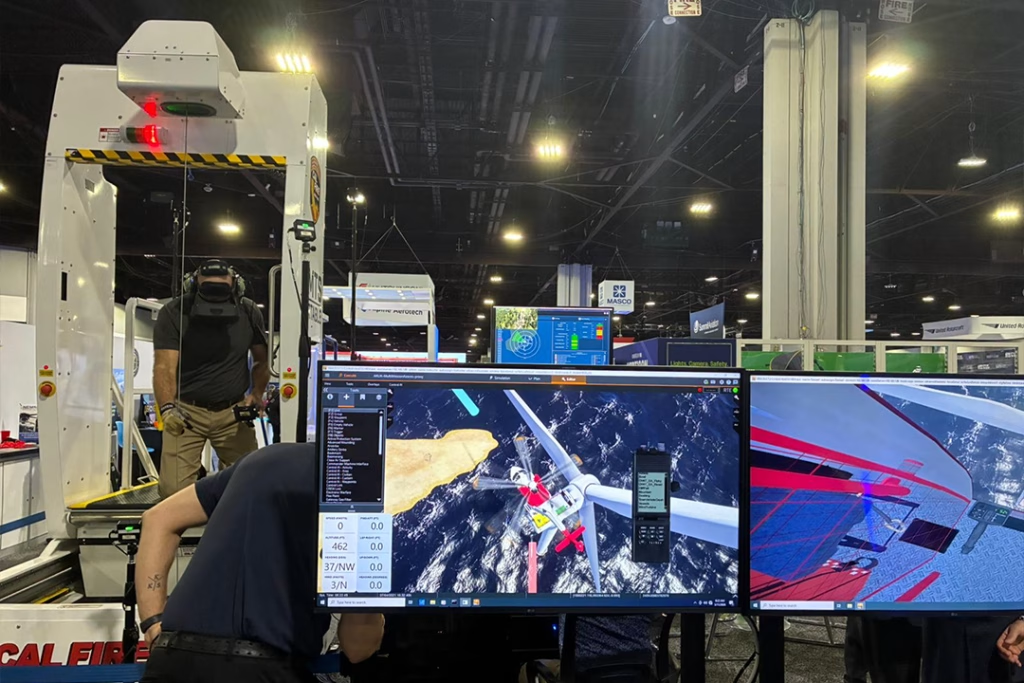
AR and VR makes the theory parts of training more engaging. With interactive 3D renderings of equipment and processes VR and AR training supports trainees to move from the theory stage to the practical stage more quickly.
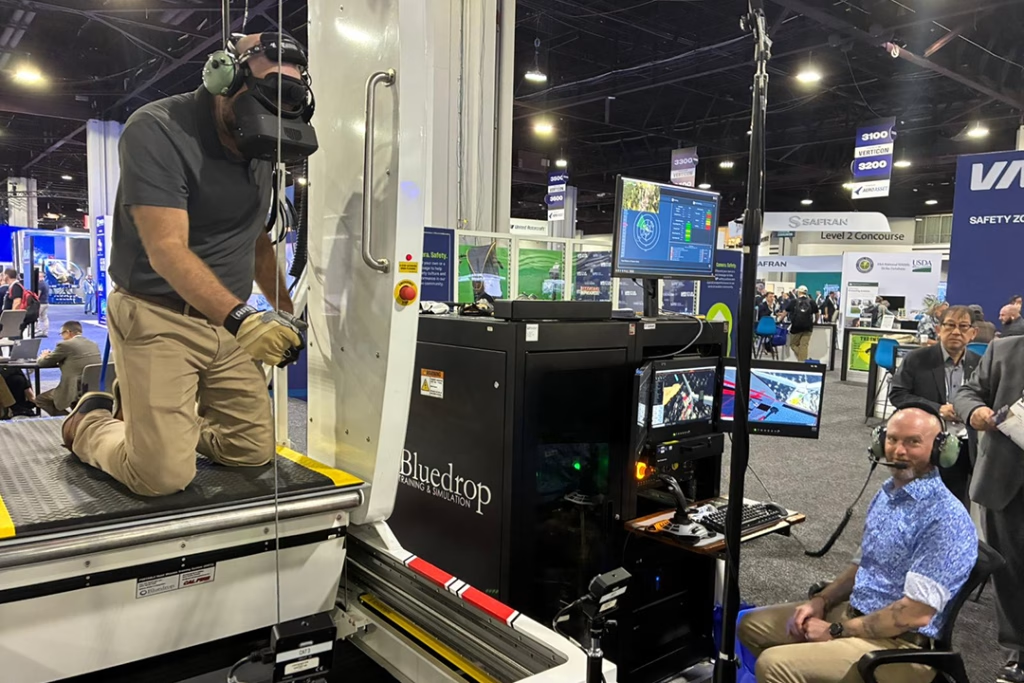
The sooner trainees can start applying their new knowledge practically, the better they’ll learn. With AR and VR, trainees can use headsets, glasses, and smart devices to support them as they perform tasks. Learning in this way means trainees are immediately building muscle memory and rehearsing essential knowledge.
Depending on the topic or the process, trainees can use AR/ VR as an intermediary support before being fully autonomous. Having additional instructions in your eyeline as they experience a training session means trainees are supported to do their best. Soon, with repetition, there will be no need for extra instructions because they’ll have developed the skills and instincts they need in their field
UKCPD, a leading UK professional training organisation, explains why practical knowledge is more beneficial for trainees:
Practical learning often allows us to retain information efficiently and for prolonged periods… [It] can generate a deeper understanding of a specific skill or subject. Learning from experience is often seen as a more powerful way to ingrain knowledge and develop abilities”.
The simplicity and adaptability of virtual training is what makes it most inclusive. If a trainee is finding a concept or a process difficult, the trainee has limitless options to support their learning:
Likewise, the instructor can respond immediately to trainees who make swift progress and set them up on individual challenges to push their learning.
A study exploring using VR to support learners with autism from Science Direct concluded, “the data suggest that VR may support educational inclusion by allowing the personalisation of content and environments to accommodate individual student needs”.
One of the biggest advantages of AR and VR is the flexibility it gives instructors when managing a mixed group of trainees.
“At any one time I might have one group consolidating their learning through a practical assessment, another repeating a task to improve their performance, and others progressing onto more advanced stages of the training.
“The technology allows trainees to work at the right pace for them while maintaining a consistent training standard. Repetition is essential in building competence, and these systems allow trainees to practise procedures multiple times in a controlled environment until the process becomes familiar and instinctive.
“As instructors we can monitor progress across the group, provide additional support where needed, and ensure every trainee builds the confidence required before moving on”
Dave, Anartes
Trainees who use AR and VR as they learn report feeling more focused and less distracted than in traditional training environments.
PWC reported, “VR-trained learners were up to 4 times more focused during training than their e-learning peers and 1.5 times more focused than their classroom peers”.
There are multiple reasons for this, including:
But perhaps the most significant reason trainees can focus more with AR and VR training is because it literally blocks out outside distractions. Physically wearing the glasses and headphones, or using a simulator, fully immerses the trainee in a hyper-realistic environment. The accurate-to-real-life digital renderings or overlays along with the sounds and realistic movements mean the “practice” feels exactly like real-life missions.
When tasks should be independent, trainees using glasses and headphones or headsets can’t hear or see their fellow trainees. They also can’t be distracted by any other auditory or visual interruptions from outside the training space. Trainees can focus more deeply and for longer on the course material. Instructors can cover more material and train more effectively.
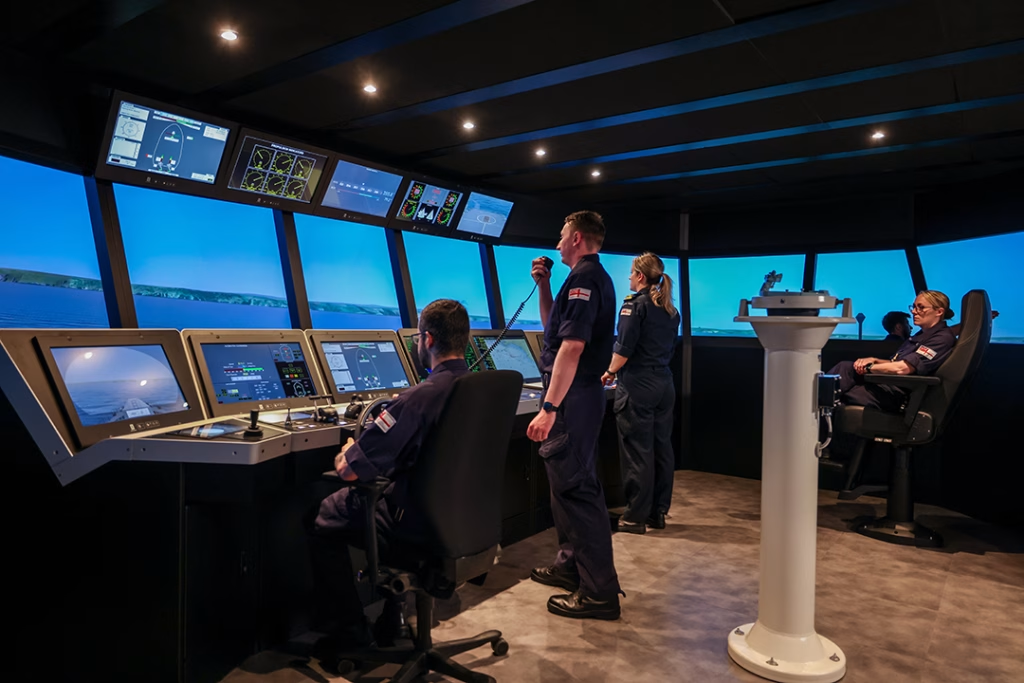
When tasks need to be collaborative, AR and VR training is easily scalable to group learning. With clearly defined roles, interactive technology, and hyper-realistic visuals, trainees are supported to work together effectively. By working as a team, trainees practice communication skills, problem solving strategies, and begin to bond.
Training with AR and VR reduces the pressure trainees face, which improves every part of the learning experience.
Using virtual technology means there’s more time and opportunity for trainees to access the course materials. As well as attending the structured sessions with the instructor, trainees can build on their learning independently. It’s easy to review the recordings of their training session remotely and with AR and VR devices available on base for trainees can practice in their downtime. Trainees don’t have to ‘ace’ the training session or put pressure on understanding everything in the training session. They can rehearse and deepen their knowledge over time.
Additionally, AR and VR training means trainees can safely fail. With the highly realistic, high quality digital environments trainees experience authentic training but with no risk to their health or wellbeing, and no risk to their teammates’ health or wellbeing. There’s no risk to equipment or limitations on accessing it. Trainees can learn, practice, make mistakes, and try again as many times as they need. Failing and improving are vital for building competency and resilience.
From the results of the PWC study, researchers concluded:
Practicing skills in VR offers the ability to try different paths to achieve better results. Learning something new involves being awkward, making mistakes, course-correcting and trying again. By giving people the opportunity to repeat a task in a natural way, practice builds confidence, which improves quality and helps to reduce mistakes.”
AR and VR training makes learning more inclusive for all trainees. It’s more engaging, makes knowledge more memorable, and reduces distractions. Regardless of the individual learning challenges trainees might face, everyone can benefit from virtual training.
“At its core, good training is about building understanding, repetition and confidence,” Dave concludes.
“AR and VR give instructors the tools to create realistic environments where trainees can practise, make mistakes safely, and improve until the task becomes second nature.”
Want to try a demo and see how AR and VR training can transform your training sessions? Book a free demo with the Metaverse VR team today.
Our team are ready to create your perfect training environment.
Get in touch today!
Find out the gaps in the training programmes in less than 60 seconds. Answer 8 quick questions and get a personalised report in your inbox.
Get our newsletter. Read the most up-to-date training news, technology innovations, and promotions in your inbox.